











In a region that is often defined by political ups and downs, both local governments and the international community frequently struggle with which challenges to tackle and in what order. Economic recovery alone will not solve the woes of the Western Balkans, nor will social or political reforms alone. A concerted effort is needed on all fronts. Not an easy task by any means. There is, however, a single common denominator that manages to tick many of the proverbial boxes on our collective wish lists. It is called the Via Dinarica. Let me tell you why.
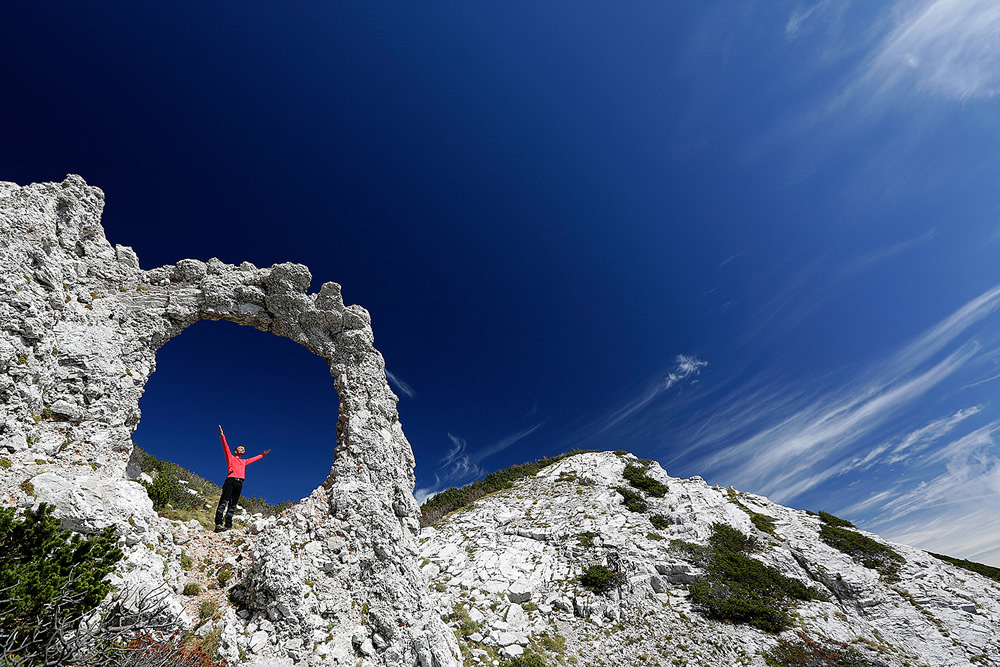
Photo: by Elma Okic; courtesy of Via Dinarica
The Via Dinarica is a relatively new concept. It is a mega trail, similar to the Via Alpina and Appalachian Trail concepts, which connects seven countries that encompass the Dinaric Alps mountain range. The Via Dinarica bridges the entire Dinaric Alps chain from Slovenia to northern Albania and western Kosovo* – and everything in between - including the heart of the trail in Croatia, Bosnia and Herzegovina, Montenegro, and Serbia. It is a tourism product that shares 19 UNESCO World Heritage Sites, 20 National Parks, 240 mountains, 2,000 kilometers of hiking and biking trails, and over 2,200 km of supreme waterways. In short, the Via Dinarica is a world class destination. Or at least has the potential to be one. The challenge is how to transform this enormous potential into a reality that will provide sustainable livelihoods for those living along its path and provide a major boost to both the economy and the image of the region on a whole. Mega Trails, like the Inca Trail to Machu Picchu in Peru or the Appalachian Trail in the eastern United States, generate both jobs and income on a grand scale. The Inca Trail alone generates $40 million for the local economy whilst the Appalachian Trail (similar in length and character to the Via Dinarica) welcomes 3-4 million guests annually.
Although the overall economic situation in southeast Europe is generally weak, tourism is one of the fastest growing sectors. It is estimated that in 2014 travel and tourism directly supported over 300,000 jobs in the seven countries along the Via Dinarica. A fully functional and well promoted Via Dinarica could significantly increase those figures, particularly for the most vulnerable populations – rural and youth.
Over the past few years, the Via Dinarica has emerged as a regional tourism destination that offers world-class hiking, cycling, skiing, fly-fishing, kayaking, rafting, caving, and a plethora of opportunities to explore the unique traditional lifestyles and cuisine. Yet much of the natural and cultural beauty that lies along the Via Dinarica remains untapped as a tourism product. Many of these products are fragmented. International competition for these markets is fierce. Resources needed to adequately develop tourism are limited and many countries in the region lack a coherent strategy for connecting products to businesses and their target markets along the trails. That is why the Via Dinarica is such an important platform. It brings the great products each respective country struggles to promote and sell under one roof by sharing resources, developing regional products that are more competitive and attractive for foreign markets, and linking businesses and other service providers key to the success of this ambitious project.
The various programs in progress, funded by the UNDP, USAID, and the EU respectively, will map and mark the three major trails – the White, Green, and Blue lines – so tourists can access the trails easily and safely. A new technical platform and content management system is being developed to effectively manage the vast amount of input a mega-trail of this nature requires, from service providers to top quality maps. It will also improve and develop community management systems for infrastructure (roads, trails, and accommodations - ranging from hotels and bed and breakfasts to small remote mountain huts). It will provide business management training for tour operators, providers of nature-based services, producers of local traditional products, and small-scale agricultural producers. The Via Dinarica development project will also establish and reinforce linkages along the trail, such as outdoor adventure packages and regional tours being offered by local ground operators and destination management consultants, between sport recreation clubs, mountaineer and mountain biking associations, rescue services, environmental NGO’s, local development agencies, and organizations for youth, women, and eco-tourism.
The Via Dinarica’s slogan – Connecting Naturally – does exactly that. It disintegrates political and national borders with ease by recognizing, preserving, and promoting the common natural and cultural heritage the people of the region share. Its greatest strength, however, is what sets it apart from other destinations. Just as healthy eco-systems are measured by their diversity, so too is the Via Dinarica. It is the unique mélange of natural landscapes, cultural traditions, and exceptionally tasty gastronomy that makes the Via Dinarica, as named by the US’ Outside Magazine, the Best New Trail in the World.
There is no better platform for the region’s political and economic establishments to rally behind. It fairly and honestly promotes the great potential of the region as a whole, while respecting the integrity of each country to define its role and approach to developing the Via Dinarica. It is one of the most inspirational grassroots movements that I have witnessed and participated in over the last 20 years. The bottom-up approach has secured an inclusive, participatory process that integrates a vast range of local stakeholders. It is this important factor – the insistence on local ownership – that will guarantee the success and sustainability of the Via Dinarica. What is needed now is broad based local and national government support for both civil society initiatives and private sector entrepreneurs to unleash the tremendous potential of the Via Dinarica to be the locomotive for sustainable and resilient economic development for the Western Balkans.